






Are roof underlayment problems silently destroying your roof deck and causing hidden water damage? Furthermore, damaged or deteriorating roof underlayment compromises the critical waterproof barrier beneath your shingles that protects your home from moisture infiltration. Moreover, recognizing underlayment failure signs helps homeowners catch problems that are invisible from the surface before structural damage develops. Consequently, whether you need roof underlayment repair or a complete underlayment replacement during your next reroofing project, finding professional help for roof underlayment problems near you safeguards your home’s integrity. In addition, understanding roof underlayment replacement cost helps you plan for this essential layer of protection.
What Is Roof Underlayment and Why It Matters
Specifically, roof underlayment is the waterproof or water-resistant barrier installed directly on your roof deck beneath the shingles or other roofing material. Furthermore, this hidden layer serves as the last line of defense against water that gets past your shingles during heavy rain, wind-driven storms, or ice dam events. Moreover, underlayment prevents moisture from reaching the plywood or OSB sheathing that forms your roof structure. Consequently, when roof underlayment problems develop, water penetrates to the deck and begins causing rot, mold, and structural weakening. In addition, proper underlayment extends the life of your entire roofing system by protecting against condensation and temperature fluctuations.
Common Roof Underlayment Problems
Additionally, understanding the most frequent underlayment issues helps homeowners identify when this hidden layer has failed. Therefore, watch for these common problems.
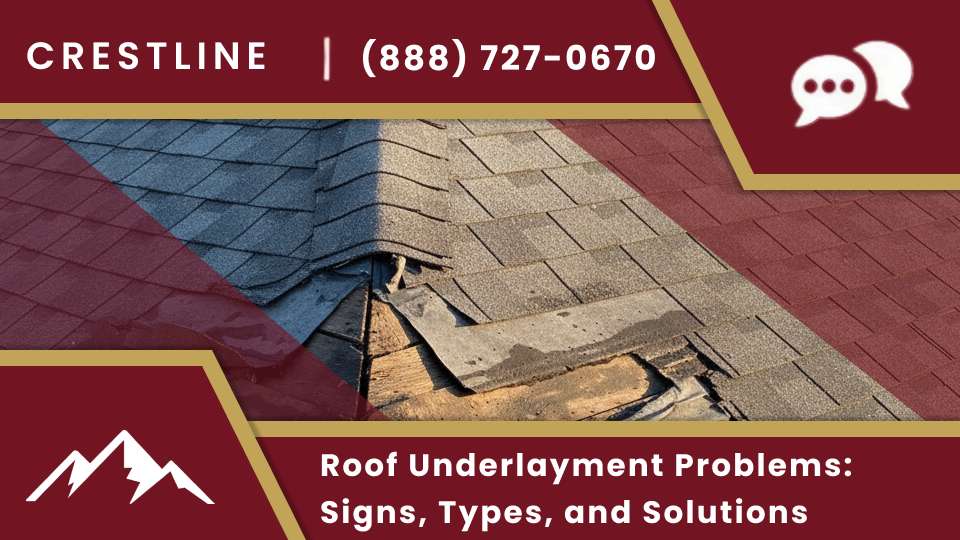
Torn or Punctured Underlayment
Moreover, physical damage compromises the waterproof barrier:
- Specifically, foot traffic during installation or repairs tears the material
- Furthermore, protruding nails or fasteners puncture the membrane
- Additionally, fallen branches or storm debris create holes through the underlayment
- Consequently, even small tears allow water to reach the vulnerable roof deck below
Therefore, torn underlayment is among the most common yet invisible roof underlayment problems affecting homes.
Deteriorated or Aged Underlayment
Similarly, underlayment materials break down over their lifespan:
- Specifically, felt underlayment absorbs moisture and rots after 15 to 20 years
- Furthermore, heat exposure causes asphalt-saturated felt to dry out and crack
- Moreover, UV exposure on exposed sections accelerates material degradation
- Additionally, repeated freeze-thaw cycles weaken the membrane structure
Consequently, aged underlayment loses its waterproofing ability long before the shingles above show visible wear.
Improperly Installed Underlayment
Likewise, installation errors create problems from the start:
- Specifically, insufficient overlap between underlayment rows allows water entry
- Furthermore, wrinkles and bubbles trap moisture beneath the surface
- Moreover, missing underlayment at valleys, eaves, or penetrations leaves gaps
- Additionally, using the wrong type of underlayment for the climate or roof slope
Hence, improper installation creates roof underlayment problems that remain hidden until water damage appears inside the home.
Underlayment Failure Signs Every Homeowner Should Know
Furthermore, since underlayment is hidden beneath shingles, detecting problems requires attention to indirect warning signs.
Interior Underlayment Failure Signs
Moreover, water damage inside your home often reveals underlayment problems:
- Specifically, water stains on attic rafters or ceiling drywall
- Furthermore, mold or mildew growth on attic surfaces
- Moreover, damp or soft spots on the roof deck visible from the attic
- Additionally, musty odors in upper floors or attic spaces
In addition, these interior underlayment failure signs indicate moisture is penetrating past the shingles and through the compromised underlayment.
Exterior Warning Signs
Similarly, some exterior clues point to underlayment issues:
- Specifically, shingles that appear wavy or buckled from moisture beneath
- Furthermore, dark streaks or stains on the roof surface
- Moreover, sagging areas between roof rafters visible from ground level
- Additionally, granule loss concentrated in specific areas suggesting trapped moisture
Consequently, exterior signs combined with attic inspection confirm roof underlayment problems requiring professional evaluation.
Types of Roof Underlayment
Furthermore, understanding underlayment types helps you choose the right material for roof underlayment repair or replacement.
Asphalt-Saturated Felt
Moreover, traditional felt underlayment remains widely used:
- Specifically, available in 15-pound and 30-pound weights
- Furthermore, affordable and effective for standard residential applications
- Moreover, absorbs some moisture which can be both beneficial and problematic
- Additionally, typical lifespan of 15 to 25 years under normal conditions
Modern Underlayment Options
Synthetic Underlayment
Similarly, synthetic materials offer modern advantages:
- Specifically, lighter weight makes installation faster and easier
- Furthermore, superior tear resistance compared to felt products
- Moreover, does not absorb moisture eliminating rot and mold risk
- Additionally, longer lifespan of 25 to 50 years with better UV resistance
Self-Adhering Ice and Water Shield
Likewise, peel-and-stick membranes provide premium protection:
- Specifically, creates a completely waterproof seal around every nail penetration
- Furthermore, required by code at eaves, valleys, and around penetrations in many areas
- Moreover, self-sealing properties prevent leaks even when punctured by fasteners
- Additionally, essential for ice dam protection in cold climates
Consequently, combining ice and water shield at vulnerable areas with synthetic underlayment across the field provides the best protection against roof underlayment problems.
Roof Underlayment Replacement Cost
Moreover, understanding roof underlayment replacement cost helps homeowners plan for this investment.
Cost Factors
Specifically, several variables influence your total roof underlayment replacement cost:
- Furthermore, roof size and complexity affecting material quantity and labor
- Moreover, underlayment material selection between felt, synthetic, and self-adhering
- Additionally, whether existing shingles need removal to access the underlayment
- Consequently, extent of roof deck repair needed once underlayment is removed
Average Pricing
In addition, typical roof underlayment replacement cost ranges include:
- Specifically, asphalt felt underlayment costs $0.15 to $0.30 per square foot for material
- Furthermore, synthetic underlayment runs $0.25 to $0.50 per square foot
- Moreover, ice and water shield costs $0.50 to $1.50 per square foot
- Additionally, labor for underlayment replacement during reroofing adds $1 to $3 per square foot
Therefore, roof underlayment replacement cost is most economical when combined with a scheduled roof replacement project.
Preventing Future Roof Underlayment Problems
Additionally, proper installation practices and regular monitoring prevent most underlayment failures.
Prevention Tips
Furthermore, follow these strategies to protect your underlayment:
- Specifically, schedule annual roof inspections that include attic examination
- Furthermore, address minor shingle damage promptly to protect the underlayment beneath
- Moreover, ensure proper attic ventilation to reduce heat and moisture buildup
- Additionally, choose quality underlayment materials during any reroofing project
- Consequently, hire experienced roofing contractors who follow manufacturer installation guidelines
In addition, the National Roofing Contractors Association emphasizes that proper underlayment installation is critical to long-term roof performance and warranty compliance.
Final Thoughts on Roof Underlayment Problems
In fact, roof underlayment problems remain one of the most overlooked causes of roof failure and water damage because the damage happens where homeowners cannot see it. Moreover, recognizing underlayment failure signs like attic moisture, ceiling stains, and buckled shingles helps you identify hidden damage before it spreads. Furthermore, understanding your roof underlayment replacement cost and material options ensures you make the best choice when roof underlayment repair or replacement becomes necessary.
Consequently, don’t assume your roof is fine just because the shingles look good. Therefore, contact a qualified roofing professional for roof underlayment problems near you today and protect the hidden layer that keeps your entire roof system working. In addition, proactive inspections and quality materials prevent costly surprises down the road.
Phone: (888) 727-0670
Email: info@crestln.com
Website: https://www.crestln.com/